LIKE Aunt Annie on Facebook

LIKE Aunt Annie on Facebook

LIKE Aunt Annie on Facebook

Thursday, June 28, 2012

The secrets of being a great teacher: how to allow creativity without losing control


Once upon a time, not so many years ago really, when we thought of education we envisaged an authoritarian figure- perhaps in a robe and oddly-shaped hat- holding a stick of chalk and standing in front of a large group of seated (and preferably silent) children. The children would listen, then regurgitate the required information when called upon.
A caricature from Vanity Fair

There are some in our society who would like that model of education to remain fixed in stone. Some of them are teachers, some are parents, some are politicians and administrators.

If you're at the coalface, you know that education doesn't look like that any more, and nor should it if we want the human race to achieve to its potential. Gradually the realisation is filtering through that mass conformity doesn't produce brilliance, that the best education is not a twelve- or sixteen-year conveyor belt operated by authoritarian adults who force-feed the children from text books as they pass.

It's taken a long time to get to this point. History is littered with schoolroom failures like Thomas Edison and Isaac Singer, who achieved greatness only once they got out from under the thumb. (Go on, YOU try imagining life without the light bulb or the sewing machine.) And as technology explodes into new realms, creativity and individuality should be valued in the classroom as never before.

Teaching styles have to change to accommodate this realisation of truth.

I'm in an unusual position amongst my colleagues. I've had the experience of teaching all age groups- from birth to the end of high school. I've also coached adults. And so I can say to you, it doesn't matter how old the student is- nor does it matter that educational models are finally on the move. The essential truths of great teaching remain the same. There is a way to maintain control in a classroom without sacrificing individuality and creativity.

As a music teacher, I had to find these things out. My students had to be creative to do well in their course- and in setting them free, I stumbled upon these maxims which have served me well for over 30 years.

Here they are.

Wednesday, June 27, 2012

How to Not Insult a Child- guest post by Sarah MacLaughlin

(Sarah MacLaughlin is the award-winning author of What Not To Say: Tools for Talking with Young Children, which I reviewed last week. Take it away, Sarah!)


We don’t mean to insult children. Sometimes we just forget how smart they are. I always aim to talk to your children like they are regular people. Wait, right, they are regular people! If you use your normal adult vocabulary (barring any overly intellectual, technical, or mature terms) kids get great exposure to our language and will always be learning new words. If you think that something you said went over their head, you can explain or just ask, “Do you know what that means? Did you want me to tell you?” That’s respectful, not insulting. Some more suggestions for keeping your communication with young ones considerate and kind:

Allow kids to keep their dignity intact. When a child has a big emotional outburst or falls apart and “loses it” in some way, they may make a small effort to retain their dignity. If you don’t know that, you could perceive this act as rebellious or defiant. They may say something like, “I didn’t like that,” or “You hurt my feelings.” My son will often make a request in a tone that not exactly my favorite—“I need some juice.”—I refrain from commenting on his tone or asking for a “please.” This is the perfect time to let it be and move on.

Don’t be condescending. When children surprise us with their unruly behavior, we should take stock. Not necessarily of them, but of ourselves. Much undesired behavior is developmentally appropriate, meaning that it sure is annoying, but it’s to be expected. Stop yourself from saying things like, “This is so unlike you,” even if it is.

Set aside sarcasm, euphemisms, and rhetorical questions. These usually go right over young kids’ heads. Explaining them can keep you on your toes: “You’re right, I didn’t sound grateful when I told that man, ‘Thanks a lot.’ He wasn’t helpful and I was being sarcastic, saying the opposite of what I meant. I didn’t really mean ‘Thank you.’” The amazing thing is that kids eventually do absorb many of the hidden meanings in our confusing language.

Don’t refer to yourself in the third person. Saying Mommy instead of I or me is an odd habit we easily fall into, one that can be confusing for a child. Use proper pronouns even if your child doesn’t. They will actually learn more quickly this way.

Skip the baby talk. It’s our natural tendency to talk to young children in language that mirrors their own. The occasional “I’ll kiss your ouchie” or, “It’s time for night-night,” is fine, but in general try to use proper words and a normal tone. “Does my wittle baby need a baba?” doesn’t help a toddler learn the English language.

Don’t lie. Even I am guilty of telling kids that the toys store is closed when it isn’t, but as far as the big stuff goes, we do this to protect children, mostly from information we think they shouldn’t know or can’t handle. When important facts are hidden, children sense it and tend to imagine terrible things—usually worse than the actual situation. Adding to the harm, a child might worry that the reason for not telling her is that she is the cause of the trouble. Remember that young children are naturally self-centered.

Many people tend to speak to a group—of children or adults—with the lowest common denominator in mind. I say it's better to speak to the highest common denominator. If you have created an environment of safety and respect, one where there truly are no stupid questions, this will not be a problem.

I'd love to hear what you think!


Special Giveaway!
Please comment on this post about ways you keep your communication considerate and kind to your children, so that you can enter to win an ebook copy of What Not to Say: Tools for Talking with Young Children, in the format of your choice: PDF, epub, or Kindle format. Sarah will be giving away one copy at each blog stop and will announce it on the comments of this post tomorrow. Be sure to leave your email so we can contact you in case you're the winner!


Other stops during this Blog Tour are listed on Sarah's blog here: http://sarahsbalancingact.blogspot.com/p/blog-tour.html.

Also, be sure to enter at Sarah's site for the Grand Prize Giveaway: a Kindle Touch. Winner will be announced at the end of the tour after July 15th. Go here to enter: http://sarahsbalancingact.blogspot.com/p/blog-tour.html


About The Author
Sarah MacLaughlin has worked with children and families for over twenty years. With a background in early childhood education, she has previously been both a preschool teacher and nanny. Currently, Sarah works as a licensed social worker with foster families at The Opportunity Alliance in South Portland, Maine. 

She also teaches parenting classes and consults with families. In addition, Sarah serves on the board of Birth Roots, a perinatal resource center, and writes the "Parenting Toolbox" column for a local parenting newspaper, Parent & Family.

As reflected in her book, What Not to Say: Tools for Talking with Young Children, Sarah considers it her life's work to promote happy, well-adjusted people by increasing awareness of how children are spoken to today.

In a busy modern life, while Sarah juggles her son, her job, her husband, her family, and time for herself, she's also aiming for: mindful parenting, meaningful work, joyful marriage, connected family, and radical self-care. She is mom to a young son who gives her plenty of opportunities to take her own advice about What Not to Say. More information about Sarah and her work can be found at her site: http://www.saramaclaughlin.com.

Saturday, June 23, 2012

Good news about risky play: where the magic happens

Do you remember this post about my risky play research assignment last year?

By the time I'd finished that assignment, I was shaking my head in amazement. My amazement was not caused by the children, who took to my risky play scenarios like the proverbial ducks to water-


and then ALL settled down quietly inside to table activities  (unheard of on that particular day of the week with that particular, very energetic demographic!).

No, my sad amazement was the result of my realisation that my biggest problem was going to be changing staff attitudes to risky play. Honestly, it's so easy to get ourselves stuck in a box called 'our comfort zone', and that's particularly true of risk versus safety. It's ever so much easier on our anxieties to be over-cautious. As Tim Gill points out, we live in a risk-averse society. Early childhood professionals are as subject to societal pressures as the next person.

But the truth of working with children is well-illustrated by this picture doing the rounds of Facebook:


If we want magic to happen, developmentally speaking, we have to allow children to be independent- to assess and take risks within our controlled environment, to fail sometimes, to try again. We have to be prepared to apply the odd bandaid and ice pack. We have to dry the odd tear.

You don't change attitudes in a risk-averse society with one day of research activities, no matter how successful your work has been. There was no 'aha moment' that day for the staff. What I saw back then was entrenched risk-avoidance, and a failure to even notice the positive change in the atmosphere created by a strenuous morning of risky play. Comfort zones tend to have solid brick walls around them, with nary a window in sight.

It was, um, depressing.

So when I returned to that centre recently, some six months after completing my research, I suppose you could say I was feeling a bit hopeless. But guess what? I have some good news.

I offered to set up the yard, and I found that the slide, which had been packed away at the back of the shed as 'too dangerous' before my assignment, was in easy reach and had clearly been used. Hallelujah!

I set it up, and when the children came out they slid down,  climbed up the slide, slid on their stomachs, came down sideways, jumped from the top onto the soft fall and performed all sorts of other crazy 'tricks'- without any adult ever saying 'stop'.

There were no collisions. Nobody got hurt. Nobody pushed. Everyone had a ball.

I got out the balance beams, and set them upon the higher setting- unheard of six months ago- with a thin mattress invitingly placed alongside.

"Can we jump off?" asked one child, eyes sparkling.

"Of course!"

And they did- all of them- some leaping without hesitation, some being more cautious, some so confident they did tricks. One girl had perfected a 270 degree turn in the air by 11am.

Nobody said "stop". Nobody got hurt. Nobody pushed. Everyone had a ball.

Then one little live-wire boy decided he wanted the planks turned into slippery dips too. I watched him try to pick up the heavy wooden planks by himself to rearrange them. I said nothing.

He looked over to me, struggling, and I said "Do you want some help?" He nodded, grinning, and directed me to where he wanted the plank to go.

"Is that safe there, or too wobbly?" I asked.

He tested.

He rejected.

We adjusted.

Soon all the planks had been turned into slides, in a way I never would have thought of myself! Other children noticed the rearrangement, and started to develop plans of their own. Next thing, the mattress had been moved to the end of the slide and some children were flying down and finishing off with a somersault.

On the other side of the playground, a somewhat withdrawn child started trying to climb the latticed walls of the sandpit (on the inside, I might say, where he would only fall on sand). I didn't stop him. Neither did anyone else.

He got right to the top and touched the ceiling; he investigated every 'bug' he could find, and brought some interesting 'treasures' down to show the other children.

A smaller child tried to climb up, and failed.

"Can you help me?" he asked me.

"No," I said. "If you can't get up there, you aren't quite ready to be up there."

He accepted this happily enough.

The screams that day were only ever of delight. I didn't need a single bandaid, and I didn't write a single accident report. When the children went inside, again they settled down to table activities peacefully- even that little live-wire boy!

Is that wonderful, or is that wonderful?

Yes, there had been a slight change in the staffing- and I don't for a moment underestimate the impact of that. Changes of attitude require fresh outlooks and strong leadership. It wasn't all about what I did that day six months ago- not at all! But I think I may have broken the ice, and then a new permanent staff member with an open mind had applied gentle heat.

What I saw from the children confirmed everything I've learnt through my reading about risky play. There was a noticeable range of behaviour on the play equipment, depending on the individual child's confidence in their own skills. In other words, the children only took risks they were comfortable with. In the absence of an adult voice crowing "Be careful!" at 30 second intervals, they took responsibility themselves for being careful while challenging themselves appropriately for their own developmental stage.

Isn't that what we want? Doesn't that make our lives easier?

Even more interesting than that was the impact that having some agency had on these children. My little live-wire, for example, had started the day by punching, biting and kicking me- a sort of welcome by fire (I think perhaps he was so pleased to see me that he couldn't find any appropriate way to express it). A little firm holding of hands and gentle talk had helped him to pull back a little, but what that child needed was to express himself physically.

He needed to run fast without being thwarted- and he did. He needed to peg a ball towards me and challenge me to catch it- and he did. He needed to fly down that slide backwards and jump off the top and burn off his big feelings.

He needed challenge and risk, and he got it.

What would have happened if he'd had some adult shouting "Slow down, you'll hurt yourself," or "Throw the ball at that target," or otherwise trying to contain his energy to a risk-free box? You join the dots. Where would that energy have gone?

And what about the agency in designing his own play space? Our interaction over the placement of the beams particularly delighted him; he flew up and down the structures he'd designed, and then- wonder of wonders- invited others to join him (wow, without punching them?!), grinning broadly the whole time. He shared; he took turns.

That was a very desirable social outcome from what started as a physical activity and then became a technological activity.

And my other, socially withdrawn young friend suddenly wanted to share his findings, suddenly shared with me and with his peers his interest in bugs, suddenly could do something the others couldn't do and stood tall.

The physical became the scientific; the scientific became the social.

Don't underestimate the power of risky play. It can often be that place 'where magic happens'.


A great little e-book about talking to your kids


What Not to Say
by Sarah MacLaughlin

reviewed by Aunt Annie


A few weeks ago I was asked if I was willing to review this e-book on my blog. Well you know me- I love to write about childcare, and any excuse will do!- so I popped over to Sarah MacLaughlin's blog at http://sarahsbalancingact.blogspot.com.au/ to test the water and see if her views were compatible with mine before agreeing.

Given that Sarah's philosophy is so similar to my own, I had fairly high expectations of 'What Not to Say', and I haven't been disappointed. For example, the quote that opens the book encapsulates exactly why I started my own blog:

Let’s raise children who don’t have to recover from their childhoods.
     -Pam Leo

As I've said many a time, the secret to a healthy relationship with our children often lies not in what 'method' we use, but in how much we're prepared to work on ourselves. It's way too easy to pass on the collateral damage that's been done to us as we grew up, without even realising we're doing it. And that is really what Sarah MacLaughlin's eBook is all about. No blame, no shame, but many words of wisdom to contemplate.

If we take the time to think about it, some of the things we say to our children are insensitive at best, and counterproductive at worst- not because we're actually trying to make things worse, of course, but because we're tired and stressed, we're surrounded by 'advice' which makes us doubt our judgment, and we've been programmed by our own personal histories to recycle mantras which are, um, less than useful. MacLaughlin's aim in this book is to help parents and early childhood educators to identify and replace some of the more useless knee-jerk responses that spring to our lips when children challenge us.

Consider the following:

Because I said so.
Don’t even think about it.
Good job!
And my own particular un-favourite, often overused with gifted children,
Show Grandpa how you can count to ten.

Do any of those sound familiar? Do you still say those things, and maybe even hang on to your right to say them like grim death, justifying them as 'normal' things to say to a child? This book will join the dots for you between statements like that and unresponsive or undesirable behaviour from your child.

Along the way, MacLaughlin refers to many of the behaviour management strategies that I have found very effective, such as reframing, narration and acknowledging emotions. She also addresses the importance of clear, age-appropriate communication, and shares my dislike of patronising children through baby talk and the sugar-coating of difficult truths.

All in all, it's a book full of what I call 'uncommon common sense'. At first glance it may appear to be just about the right words to say, but in fact it's more than that; it's a spot-on parenting communication manual for those who'd like their child NOT to need therapy as an adult.

As an added bonus, many challenging situations have been linked by the author to matching children's books. These can be used to encourage open discussion with children about their more difficult behaviours. That just makes me want to clap my hands in glee- it's exactly how I'd approach behaviour problems within an early childhood classroom. Stories are a wonderful way of allowing children to dissect and discover new ways of coping with their emotions.

Yes, there were a few moments in the book where I paused and thought, “Well, that's not exactly how I'd do it,” or “I'd have to watch my tone of voice when I said that.” But I agree with almost everything Sarah MacLaughlin says, and I'd definitely mention this e-book as a resource for anyone who wants to understand the relationship between what comes out of our mouths and how a child responds.

Highly recommended. You can buy it right here: http://www.amazon.com/What-Not-Say-Talking-Children/dp/0965469425/ 
-for a very reasonable $US12.


(PS: No, I wasn't paid for this review- my opinion is not for sale!)


Special Giveaway!
Please comment on this post about using or not using your words with your child, so that you can enter to win an ebook copy of What Not to Say: Tools for Talking with Young Children, in the format of your choice: PDF, epub, or Kindle format. Sarah will be giving away one copy at each blog stop and will announce it on the comments of this post tomorrow. (Other stops during this Blog Tour are listed on Sarah's blog here:http://sarahsbalancingact.blogspot.com/p/blog-tour.html) Be sure to leave your email so we can contact you in case you're the winner!

Also, be sure to enter at Sarah's site (http://sarahsbalancingact.blogspot.com/p/blog-tour.html) for the Grand Prize Giveaway: a Kindle Touch. Winner will be announced at the end of the tour after July 15th.


Tuesday, June 12, 2012

Surviving your gifted child's schooling, part 2: Don't let the spark go out!

I've told you a little bit about my gifted son's first years of school, which admittedly was a bit of a horror story from my point of view. Today I thought I'd talk about some happier experiences, so you'll know what to look for in your gifted child's teachers.

And I also wanted to remind you that gifted children are, in some ways, as diverse as any other group of children- even when they're related to one another. There are few firm rules about achieving a happy schooling for your gifted child. The 'best thing to do' will be dependent on your child's personality and level of giftedness.

My own early school experiences couldn't have been more different from those of my brother and my son. Mind you, that was partly because my poor brother had paved the way for me; after four years of dealing with him, the teachers were better prepared for Another One Of Those Children Who Can Read. He'd had a shocking time. My mother used to say that his whole personality was changed by his first years of school, and he'd gone from an outspoken, affectionate, happy four-year-old (who was prone to doing things like explaining how a steam engine worked to a railway carriage full of passengers, or writing and illustrating sentences like "The anaconda dislocates its jaw to consume large animals, hence the fascinating gape", and bursting into tears because he couldn't grasp the meaning of the writing on the top of an adult magazine that said "registered for transmission by post as a periodical") to a withdrawn and somewhat depressed six-year-old.

You don't want that.

That's what can happen when a teacher treats an extremely capable child like a liar and a problem, simply because he demonstrates an uncomfortable truth or two (like, that he can already read and write- oops, there goes the year's lesson plans). My only hard and fast rule is that so much is dependent on the teachers available to your child.

I was much luckier than both my brother and my son; I had a seamless transition to school. Bless you, Miss Bryant! Now, there was a wonderful teacher of the gifted, despite having absolutely no training for any such thing.

She was prepared to be flexible, and she was smart about it too. When she discovered that I could already read, instead of going "Dang it, I have to prepare a whole extra syllabus for this nuisance child!" she saw it as an opportunity. I was encouraged to bring my favourite books from home and spend some time each day reading aloud to the class, while Miss Bryant did some preparation at her desk with one eye on the cheeky kids in the back row.

Brilliant! Somehow she'd detected my ability to entertain as well as just read. I loved it. The class loved it.

That wasn't the end of it, either. In hindsight, I realise that Miss Bryant constructed whole lessons designed to stimulate me without disadvantaging the rest of the class. I remember her reading us a lot of simple poetry, and explaining how a poem worked- a great lesson in recognising speech rhythms and individual sounds within words for the pre-readers, but a marvellous piece of creative bait for me. Looking back, I remembered for many years a lesson where she even asked us all to try to write a poem- but as a teacher, I know now that my memory was deceiving me; I was the only one in that class who could read and write already, so she must somehow have delivered that stimulus just to me. Perhaps the others were asked to draw a picture in response to another poem.

I do remember her sending me around to another classroom- the deputy principal's, I believe- to show off my work afterwards, my poem having been neatly written out over my own illustration. I remember feeling acknowledged for my skill, but without feeling like a performing seal; I was allowed to show off my work on my own terms, without anyone standing over me clapping their hands.

Here's the poem I wrote, aged 5- sadly the drawing that went with it is long gone.


It was obviously an excellent poetry course that she delivered to a 5-yr-old, to get a result like that.

That's what you want for your child. You want a teacher who thinks outside the square, and who is clever enough to learn what will stimulate and teach your child without disadvantaging anyone else in the room. Your child will let you know if they have a teacher like that, because they'll want to go to school.

Of course, I was a biddable child- as I said at the start, there are as many types of gifted kid as there are fish in the sea, and some of them would be far less cooperative than I was. But that doesn't change the sort of teacher you need to find for your gifted child. The teacher doesn't have to be a genius, but they have to be good at recognising a gift in a child and extending it. They have to be willing.

I had reason to be grateful for that good start; my schooling was not all beer and skittles. Thinking that they were doing the right thing by me, the Powers That Be then decided to advance me straight to 2nd Grade, given that I could already read and write. These were the days of universal streaming, on the basis of perceived cleverness as observed through school exams; it was before the days of political correctness, and the classes were clearly labelled A, B and C. Unfortunately, fearing that the leap to 2A was somehow too much for me, they lost their nerve and put me in the B class- with a second-rate teacher, who resented me for being different, and peers who hated me for STILL being way smarter than them despite being a whole year younger.

We shall draw a veil over that year, I think. The memories of bullying, misery and general educational neglect really don't need revisiting.

To compound the problem, they then chickened out of continuing to advance me because I was "too young" (which probably means they'd noticed I was unhappy and drawn the wrong conclusion about why). So I repeated 2nd Grade, this time in the A class.

Sigh.

Please don't let your child be messed around like this. Chronological age is a terrible guide to what's best for a gifted child. What you need is an unbiased assessment of your child's social and physical maturity, as well as their intellect. If you start messing around with your child's schooling based only on the result of some IQ test, you are doing them a grave disservice. For some children, taking them out of their peer group and advancing them is the worst thing you could do- for others, it's the best.

You also need to involve that child in decisions about their future. They will tell you quick smart whether they want to be advanced or not. They may ask what teacher they'll have, and that is an excellent basis for a decision, regardless of whatever political blah blah you get fed by the school (who will likely be playing a numbers game on class size as well as covering their backs about the relative quality of their teachers). Children know those teachers and how they behave in the playground. They know who they'll get on with and who they won't. Please listen. Please be their advocate when you talk to the school about their future.

I sometimes try to imagine how my life might have been different if I'd been put straight into 2A, with a brilliantly insightful teacher (thank you, Mrs Williams!) who challenged me like Miss Bryant did (I believe I wrote a whole book of stories in 2A, in between acing the spelling tests and the arithmetic). She would have eased me into the new peer group, then moved me straight up to primary school. And in this way, I have a suspicion that I may have developed a bit less attitude and a bit less arrogance- two characteristics which are socially troubling for me to this day.

It is Not Good for a child to realise they're intellectually putting it over kids a year older than them, effortlessly. It wasn't good for me, and I was a Good Girl. I shudder to think how it might have affected a gifted child with a much more assertive personality, like my son.

Consider that for a moment. Gifted children are naturally challenging, naturally forceful in pushing for their rights, naturally expert manipulators. A year cheekily resting on their laurels and/or feeling miserable and unchallenged is about the worst thing you can do for their social development, so there'd better be a damn good reason for not advancing them- such as intense shyness, or strong supportive relationships within their current peer group that you don't want to lose, or a really excellent teacher in their current grade who can give them the support and extension they need.

Having no teacher willing to take on your child as an accelerated student sends a different message. If this is the case, or if your child feels seriously unhappy about all the possible teachers within the next grade, it's time to change schools.

Just sayin'.

You don't necessarily need a brilliant teacher every single year- that would be a lucky child indeed- but you do need a chain of teachers who are willing to acknowledge your child's gifts and work with them. It's the attitude that matters, not the syllabus. Did you hear me? The attitude.


Not the syllabus. Teachers don't always need to push whole years of syllabus down from the higher grades to satisfy a gifted student; for the precociously gifted child this may be needed in their area/s of interest, but the vast majority of gifted children are not hanging out to go to college tomorrow, and they don't need to be put in a parental pressure cooker either. Certainly in the early years, a gifted child will usually appreciate the opportunity to self-direct and learn through their precocious play.

Teachers can expand lessons sideways and allow gifted children to indulge in their particular enthusiasms, as Miss Bryant and Mrs Williams did with me. An enthusiastic, self-motivated child will learn, if they're allowed to teach themselves and are given the right tools.

That isn't wasting time. A gifted child will take off like a jet plane when they find something that stimulates them, and you won't be able to stem the flow of questions.

Whatever you do, don't allow that spark in your child to be quenched for someone else's convenience. Keep those lines of communication open, both with your child and with their teachers. If something seems wrong, if your child is frustrated and upset or withdrawing, investigate and act upon your findings. If the teacher is frustrated and upset, he or she needs some help plumbing the depths of your child's personality, or may need to do some personal research on gifted education. You can help them by leading them to articles like this, or to the many wonderful articles by Miraca Gross and at the Hoagies site online.

It's a huge responsibility you have there, parenting a gifted child and guiding them through their schooling. Our society needs the gifted children to flourish, so that they can be our leaders and inventors and teachers of the next generation. Are you ready to be an advocate?

Wednesday, June 6, 2012

Surviving your gifted child's schooling, part 1

I don't think I've pulled many punches to date in my posts about gifted children. I don't think I've ever led you to believe it's going to be easy raising that child. Well, news flash: this is the hardest bit, right here.
My young man in the early school years.
He must have had a good day- the smile
is very unusual!

School.

Tuesday, June 5, 2012

Fathers' Day Blog Hop, courtesy of Father Bear


Fathers' Day is coming in the Northern Hemisphere, hard on the heels of Mothers' Day down here in the South. Deborah from Teach Preschool has organised another blog hop so we can share ideas for Fathers' Day books and activities, so I've been putting some thought into choosing a story which features a strong father figure.
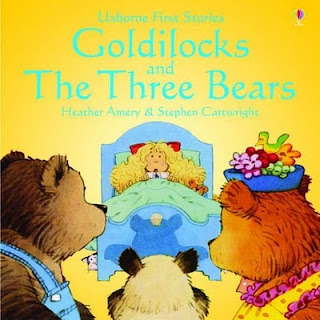
There are many printed versions of
this old favourite!
Well, to be honest it didn't take much thought really! I have never met a child who didn't like the story of The Three Bears. It's one of my 'magic tricks' when the day just isn't going well- sit the kids down, preferably on comfy cushions, and start telling them about a certain naughty little girl and the trouble she got into in the forest. And I always, always make Father Bear a large, loud, growly old softie- the epitome of loving fatherhood.

Here's the way I tell the tale. (Mind you, it's never the same twice!) I have a picture book of The Three Bears which I use to illustrate the story, but I never actually read from it- I tell the tale my own way. I'll pop in some activity and discussion ideas along the way, with some specific Fathers' Day ideas at the end.

I wouldn't use all these ideas in one storytelling session, of course- I'd only use the ones that were relevant to the current programme and to the children's recent interests.

Saturday, June 2, 2012

Preparing your preschooler for the teenage years

I suppose you're going to tell me that's a ridiculous title for a blog post. "You have to let little kids be little kids," you'll cry! (And I'll agree, and tell you to keep reading.)

Or maybe you're here anticipating that I'll be talking about pushing down the curriculum, to give your child a head-start academically. (You'll be disappointed- but please keep reading, because you'll learn something that you need to know.)

It does seem far-fetched, and possibly irrelevant, to think about your preschooler (and by preschooler, I mean any child who hasn't got to school age yet) in terms of the teenager he or she will become. I want you to put that feeling aside for a minute, and put this in its place:

YOU REAP WHAT YOU SOW.

Modelling
risk to my
4-yr-old
What you are doing right now, in bringing up your young child to the best of your ability, is like making a wine. You're choosing your 'grapes' to plant. It won't matter how carefully you nurture the vines, how skilfully you crush the fruit, how long you age the finished product, if you plant poor quality grapes to start with. What you are doing right now is creating a certain type of teenager in the future, through your parenting choices now.

Scary, huh? There's a lot of responsibility involved. It's daunting.

So let's have a look at some of the characteristics of teenagers that can be the most challenging, and how to 'plant the right grape vines' to avoid the worst of it.

Friday, May 25, 2012

Are 'gifted' children really so different?

My post on gifted toddlers has made a little splash out there in internet land. I've had some very interesting conversations as a result. For example, Janet Lansbury (whose post 'No Bad Kids- toddler discipline without shame' was referenced in that post) brought up one issue which recurs often enough for me to deal with it in more detail. She commented:

"I truly believe that every child deserves this level of respect and sensitivity. Yes, the brighter the child, the more sensitive he or she usually is...but ALL children need this...don't you think?"

What an excellent point to raise. And of course the answer is a wholehearted 'yes'. All children deserve respect. All children deserve an authentic response. The advice I gave that mother could be applied to any child, really- respect and authenticity would work to improve the behaviour of just about any child.

My gifted boy at 4, captivating the crowd
with his rendition of '5 Cheeky Monkeys'.
Butter wouldn't melt in his mouth. But he
WOULD NOT go to bed.
So what exactly is it about gifted children that needs extra care? Are they really so different from other children? And why do the parents of gifted children seem to need extra assistance with their parenting, if it's really just a matter of keeping to the same path as with other kids?


Saturday, May 19, 2012

The challenges of a gifted toddler

I've written already about the difficulties of caring for gifted preschoolers, but what about the precociously gifted toddler? The challenges can be pretty daunting when your two-year-old has an astoundingly advanced ability to communicate, coupled with the normal emotional meltdowns associated with this age group. The parenting books just don't deal with this stuff. 
At 18 months, mine already
expressed himself clearly!

I was lucky; when I was parenting my 2-year-old gifted child, I was being mentored by the giftedness guru Miraca Gross through professional development in my workplace. She made me feel sane. Honestly, a toddler who can express himself well enough to argue the point logically while melting down is a pretty crazy-making phenomenon. 

And this is pretty much the problem that confronted "Angelique" when she asked me for help with her 2-year-old, "Julius". (Thank heavens for the new message function in FB Timeline pages!)

She started by thanking me for my post about gifted preschoolers, and describing her 2-year-old son Julius in general terms.

Angelique: ...My son also was one to walk at 11 months. It's actually pretty amazing how broad his vocabulary is, because 6 months ago he had a 90% blockage of his adenoids... I couldn't imagine how much he'd be talking if he DIDN'T have medical issues! ...My family used to think I was crazy because I would explain something to Julius, or I would squat down to his level and explain why he could/couldn't do something. For the longest time he thought we would have to squat together to converse... Now everyone in the family (the ones who thought I was nuts) now squat to his level and ask him to look them in the eyes as I have always done... 

...Also speaking softer than him always caught his attention (since he couldn't hear very well). It also taught him he didn't always have to yell after having his surgery. His psychologist said he could be one of those crazy kids who graduate at 10... Not into that, because the kid needs to have a childhood, however I am trying my best to teach him new things... Today we painted with watercolors instead of finger paint which he has never done and LOVED.... always looking for something new to pique his interest! I truly appreciate your insight and I appreciate the offer to turn to you for help!

So far so good; Angelique is already doing many of the things her little son needs, despite pressure to maintain what society thinks of as 'age-appropriate childrearing strategies', and I try to reinforce this. 

Aunt Annie: You hold your ground- sounds like you are doing all the right things. I found my gifted son made me a good parent because he wouldn't stand for anything else. With a gifted child you HAVE to be respectful, and authentic, and all those things I talk about in the blog. A long as you're paying attention to his actual needs rather than what's expected, you will be fine! But I am here when you want to talk something over.

At Julius' age, mine started to refuse to be
photographed. See him pushing away from
me? There are years in which all I have is
a school photo of him, mostly scowling.
Having been through the gifted-child experience, I could have put money on Angelique hitting a wall at some stage- and a month or so later, this was in my message box.

Angelique: Ok, so you told me if I ever needed advice I could ask you... I'm about to lose my mind and I'm desperate, so here I am! 

I'm not exactly sure how I am supposed to deal with Julius' emotional issues... It seems like they are MUCH more extreme then other 2 year olds his age. His feelings are hurt, and he'll tell you exactly how it has hurt him- and he is now starting to take his frustrations out on his brother. 

Early obsessions: normal.
My son was obsessed with
Thomas the Tank Engine
(here he is as the Fat
Controller for Book Week!)
His OCD and anxiety has been MAGNIFIED with his brother lately (his little brother has been in and out of hospitals the last 3 months so Julius is having problems dealing. I am trying to do things to make him feel special, and giving him special time with just me and him.) But he freaks when his brother touches his things, or does something that he thinks in his little gifted mind is unacceptable. I can't help but laugh sometimes when he tells his brother "No hands, baby Aidan, that's my stuff", like the baby will understand, and gives him a baby toy instead. 

SOOO I guess my main question is, how in the world do you deal with the different emotional issues, and how am I supposed to discipline a 2-year-old who is WAY past the whole time out 
stage? 

Aughh, being a mom of a gifted kid is hard work.... almost as hard as his baby brother's medical issues! The 3 of us were all crying in the living room the other day, so I'm asking for advice from the best person I know for this! Thank you again for your insight and being an amazing source of info for me!

Poor Angelique. Here's the strategy I dreamed up for her.

Aunt Annie:  Well, the first thing you need is a HUG!

*HUG*

Wow, you really are copping it, aren't you? Look, I'm not a great believer in time out these days. I used to use it myself, but I think its main value was to let ME cool down. 'Time in' is actually more settling for the child- i.e. where you separate him physically from whatever he's doing that totally SUCKS (kicking and screaming if necessary), and then spend time with him. 

So with Julius, who is so advanced intellectually and verbally, you actually have a slight advantage here- you can use more complex 4/5-yr-old concepts when talking him through the terrible twos. Yes, he is being a completely normal 2-yr-old emotionally- bright 2-yr-olds can be VERY out there when they lose the plot. IT WILL STOP. He WILL grow out of it.

If you can hold it together enough to NARRATE what's happening without value judgments, it will help. Set a boundary. Then 
try talking and acknowledging the feelings, plus reinforcing acceptable ways to express those feelings.

So, say the baby has his toy. You stop his hands from whatever inappropriate thing they're doing to the baby, hold him so he can't do it again, but lovingly, and say calmly and firmly "I see that the baby has your toy and I see that you have some big feelings happening. I won't let you hit the baby (or grab things from the baby, or shout at the baby). If you want to hit, you can hit this pillow (or tear this paper, or shout and stamp your feet outside)." 

When the rage subsides a bit... "Can you tell me about the big feelings when the baby takes your toys? Are you angry? Or are you sad?" And let him talk. 

You can introduce the word jealousy, acknowledge that the baby is taking a lot of your time and that he's sad about it, tell him you understand. Maybe you can talk about your own childhood or some other relatives' childhoods, how they had little brothers/sisters and were jealous, but are glad they have a sibling now. Be real. Be authentic.

Another way of letting him release feelings is with puppets. Maybe you could get a baby puppet and act out the baby taking his toys, and let him work out some ways to deal with it. If you can introduce some humour, he will really appreciate it!
Mine melted down if not given
real tools and treated with
 respect for his intellectual age.

It does sound as though he is particularly sensitive. Many very, very bright children share some of the extreme sensitivities of kids with Asperger's Syndrome- my brother is a perfect example. He would melt down over crazy stuff like my mother feeding him peas- he hated hard stuff in his mouth. And me? I still melt down over conflicting noises, like someone talking to me over the TV, or someone who has the radio and TV on at once. Now I am NOT saying Julius has anything like that, but some of the strategies can be very useful with hypersensitive kids.

Try to avoid overstimulating him. Keep your environmental colours fairly neutral, try not to have too much mess around (hahahahaha very funny with a baby and a 2 yr old, I know!), avoid loud music playing, have safe places for Julius to retreat to AWAY from the baby. If the baby is driving him nuts, buy a low-rise playpen and put JULIUS'S TOYS in there, so the baby can't get them but he can. 

It's VERY important that you have firm, clear boundaries around what is not acceptable with the baby, and with you. Have you read Janet Lansbury's page about 'No Bad Children- Toddler discipline without shame'? Go to www.janetlansbury.com and look in her most popular posts. Emotionally, Julius is 2. Intellectually, he is way above that, but you need to deal with the toddler emotions in a toddler-appropriate way.

Have a think about all this and get back to me!

Well, Angelique messaged me back within a matter of hours.

Angelique: THANK YOU THANK YOU THANK YOU... So I am going to be printing that blog and putting it on my fridge!

It's nice to know this won't be my life forever and that this will end. Some days it doesn't feel like that, but it's nice to know it won't always be this hard! I guess once we are through this stage we'll go on to a different problem.
 
Julius DOES have some super sensitivities (that's actually what raised my concern and what got me mentioning something to the Dr, who then sent us to the psych). Noise is a BIG thing- and with a baby who is crying a portion of the day from pain, THIS drives Julius NUTS! He'll yell at the baby "STOP CRYING" constantly, and then freak out when Aidan falls asleep because he thinks he did something wrong- so he'll yell at the baby to "WAKE UP" because he's concerned! Asperger's was something we were looking at. The kiddo is VERY particular in a lot that he does, which I'm trying not to let get too obsessive. 

So it's pretty amazing today... just by saying "I won't let you <fill in the blank> with the baby", it has totally changed the extent to which he tries to push his limits. Who knew those 4 words could change it?! I guess I'm personally struggling with the fact that he understands more then he should, but is doing things anyway (being 2). I guess I just have to remind myself that he's two- even though he acts older, he's still two.

I truly do appreciate your insight and cannot thank you enough... I actually have one of those big round play pens that have a door, that I bought after I had the baby. I took it out this morning and Julius has LOVED it! He has played in there (baby free), and I set it so the door is on the inside so he comes and goes as he wants and yet his things are "safe." He loves it, so I think I'll just keep it out for him.

I'm printing out what you wrote and sharing it with my husband and mom... you are amazing at what you do thank you!


Whew. I was just gobsmacked that this worked so quickly! Toddler parents, if you haven't read that Janet Lansbury post, skedaddle over there right now. Between Janet's understanding of respectful parenting and my understanding of giftedness, I reckon we've got this one nailed.

I replied to Angelique:

Aunt Annie: Oh Angelique, you made me cry. I am so pleased that what I said to you worked- though I'm not surprised!
The divide between emotional and intellectual maturity is probably the hardest thing to grasp about many gifted children. He still needs you to be a strong guiding hand on the boundary fence, regardless of his ability to talk and think in a somewhat precocious manner. 

Later on, this will become an ability to reason and manipulate and argue in a frighteningly logical and assertive way, and you will need to be on your toes. Get ready to say "My job as your mum is to make sure you are able to be happy when you grow up. I know from experience that if I let you do this, it will make you unhappy later on, so I won't let you do it." (Followed by real examples, real stories- always give your evidence.) That strategy saved me on several occasions with my strong-willed, argumentative son. Be ready!

Also I want to congratulate you for your perception and calmness in seeing that Julius' sensitivities are beyond the 'average' and seeking professional help. Denial that there's a problem has never been helpful for a child- you have done the best and bravest thing for your son. Learning how to handle his sensitivities early will be so helpful for his development and give him the best chance to realise his amazing potential. Well done, you!


And she came back almost at once with this:

Angelique: Haha... well, reading what YOU put made ME cry! It's always nice to know that I'm not the only one going through this and that this stage WILL end!

His ability to argue & manipulate situations at 2 scares me because he can already get his point across... I'm in deep trouble when he's a teenager.


I have to confess... I'm totally one of those moms who will put my kids and their needs WAY before my pride & feelings. But we knew Julius was "different" when he was rolling at 2 months & crawling at 4 months, putting his toys away in the correct spots at 8 months etc... It just got more apparent when he could talk, so I took him to the Dr's. I would rather do what I can now to be able to get the best future for my kid. Thanks for everything!

And thanks to Angelique too, for letting me share her problem with other readers. She is so right about the gifted teenager- if you haven't nailed the relationship with the gifted child before puberty, your learning curve will be sending you backwards at a million miles an hour. Boundaries, parents, boundaries! Don't let that silver tongue fool you! If you label the gifted child 'cute' and allow him/her to get away with murder, you are asking for trouble.

Just sayin'!

Friday, May 18, 2012

Let's talk about money. And appreciation.

For so many families, childcare is not really a choice. Oh sure, just about everything in our life involves a choice- I know that, believe me. But sometimes the alternatives to childcare are pretty dire.

You could choose not to have kids.

You could choose the one-parent-working route, and not even try to own your own house, or to have any more kids, or whatever that financial hardship might mean for you.

You could just give up on trying to work at all, and pay the rent and make ends meet on the dole.

And so on. Times are tough. All the alternatives have a price. Often childcare is the best option.

But boy, is it expensive!! It can make you feel quite very resentful to see all that money going out the door when you're working so hard to get it. And some of that resentment seems to get laid at the carers' and teachers' doors by some parents.

Making money to help out mum & dad?
Sometimes I think there might be a little bit of a misunderstanding happening.

Many families whose children are in care or at preschool during the day are in pretty dire financial straits. When you're financially stressed it's hard to see things clearly. Perhaps, because of these worries, parents can be a little blinded to the fact that the people who take care of their children are, more often than not, in the same financial boat.

I wonder how many of the parents who use Australian childcare and preschool facilities are actually aware of how little the workers are paid?

Let me give you an example of our wages. One private centre raised the daily fees to cover the cost of extra staff, as required by new legislation. The price ended up over $90 per day for babies. Any childcare worker at that centre who had their own baby in care- or, heaven help them, a baby plus one or more other child- had to seriously consider their options, because that $90 constituted the larger part of their daily wage after tax.

That's a pretty extreme example at a particularly expensive centre- but believe me, it's close to that bad for all of us workers. I don't have children at home, and I own my own home outright- but I still had the devil's own job surviving on my weekly salary when I was working full-time. All that money you're paying out for childcare is NOT, repeat NOT, filtering down to the workers. I've just been browsing the award wages for Early Childhood workers, and it's not pretty.

And this is where this blog post is heading. We're not here for the money. The money is terrible. Please keep that in mind, as you rush in and out of our centres with certain expectations of what all that hard-earned money is buying for you. Please keep that in mind, as you sit down (probably exhausted after work) for your parent-teacher interview.

Let's talk money a bit more, so you really get it.

Take the Early Childhood Teacher, or ECT- fully university trained, at great expense to themselves despite the recent increase in government support. Even with the current extra government support, an early childhood education degree can cost in the region of $700 per subject (and it's twice that without the government support) before we even consider buying textbooks and other expenses.

For example, to top up my Diploma to the lowest rung required for teaching preschool, I needed to study eight subjects. How many hours do you think it would take me to earn that $5,600, remembering that I also have to pay bills and eat, on my current casual Diploma wage of about $22 per hour? (It would be even less per hour if I were on a permanent wage.)

Our least qualified workers are trying to survive on less than that, and our most qualified teachers aren't making a significant amount more (as well as working untold hours of unpaid overtime). And so exactly how attractive do you imagine is it for the best high school graduates to take on a TAFE or uni course that will incur such a large loan compared to their earning power? (I can't imagine why there's a shortage of qualified ECT in EC settings, can you?)

The maths is frightening. In the end, the money we make from our qualifications is hardly worth the price of the piece of paper.
I can make $25 an hour nannying, and I'd only have to care for one family's children with no qualification needed, no paperwork to do and no after-hours expectations at all.

We're not here for the money.

And here's another real worry for the EC education workforce. Did you know that once a worker obtains an Early Childhood teaching degree, they're paid significantly more for working in the infants' department of a primary school than for working in an early childhood care setting?

That's right- same qualification, equivalent workloads and stresses- but lower wages.

Guess where most EC teachers want to work? Yep, correct- most of them are in a long queue for a job in an infants' school. Not because they don't enjoy working in preschools or long day care, but because they simply can't survive on the wages offered. Many directors are having the devil's own time finding teaching staff who are committed to Early Childhood settings, rather than marking time till a job turns up in a school.

I'm sure you can imagine how this sometimes impacts on teacher quality. If you're financially stressed, if you're constantly wanting and waiting to be somewhere else, you're not going to give of your best. Fortunately there are some ECTs out there who are actually committed to EC settings- I hope you've been lucky enough to find one at your centre.

Playing at being the breadwinner?
Just quietly, it also impacts on gender representation in EC workers. Even in this day and age, men often feel the need to be (or are expected to be) the primary breadwinner in the family, and taking a poorly-paid EC job can be extremely challenging on an emotional level. Even the most outstanding male teacher in the world of EC blogging, Teacher Tom, admits that his career in EC education is a luxury afforded to him only by his wife's more lucrative career.

So what's my point?

My point is that despite this job being very unrewarding in terms of dollars, there are many wonderful, committed EC teachers and workers out there who would really appreciate your understanding and support. (And who would really appreciate it if you took your feelings about the fees out on the government, not on them.)

It's one thing to have a vocation for working with children, and to give freely of your own time to do your job the very best way you can. It's another thing entirely to be expected to go above and beyond the call of duty out of hours, or to be expected to do the work of parenting on top of the work of an educator during those poorly paid hours, or to be abused for not doing more within those full-to-the brim, underpaid hours of work.

The ECT who hands you a beautiful portfolio at the end of the year, full of your child's artwork and professionally written and evaluated observations, hasn't knocked that up during working hours while she kept one eye on the kids. She's done it in her own time- in fact she's probably done 25 or more of them in her own time, while her partner crankily queries the unpaid overtime and invasion of their relationship time. A little insight into what that cost the teacher in time, a little thank you from every parent- that would be really, really nice.

The carer who asks you to please send your three-year-old in shoes with velcro fasteners isn't being lazy or dodging his duties. He can support a child to tie their own laces if they have a clue already, but teaching them to do that is your job. He simply hasn't the time or the support to tie 25 sets of laces before the kids go outside. If your carer makes a simple request, there will be a good reason. Please don't make a fuss about it. If your carer can't do for 25 children everything that you would do for your own two or three, please don't be surprised and indignant.

The daycare worker who hands you a plastic bag of soiled clothes is not your washerwoman. She may have seven of those bags in the laundry bucket, and her eyes need to be on the children- not on the washing machine, and not on seven pairs of clean but unnamed underpants while she tries to work out what belongs to whom. Please don't berate her at pick-up time.

A little bit of appreciation and understanding goes a very long way. Many, many childcare workers and ECTs absolutely love working with your children, but the way they are being paid has no relationship whatsoever to the level of responsibility they accept (or, for that matter, to the number and quality of tasks expected of them by the regulations and by centre management). When they go home at the end of the day, it's to the same sorts of financial stresses as many of the parents, or worse.

You can make a difference to how we EC workers feel at the end of the day. All it takes is a little understanding and appreciation. Because really, the vast majority of your fees fly straight over our heads and disappear- into rent, and insurance, and power bills, and maintenance, and heaven knows what other running costs each centre must cover. And we, the staff, are left scrabbling around on the ground splitting up the small change for our wages.

We're only here for the love of it.


Sunday, May 13, 2012

Mothers' Day at Annie's house

Mothers' Day passes quietly in this house. My son is many miles away, and we've agreed that we won't subscribe to the Hallmark mentality; it's not necessary. I know that he appreciates me every single day of the year. He doesn't need to have a knee-jerk reaction to some randomly allocated date on the calendar to prove he loves me. Every time he calls me or pops up on my Gmail chat, it's Mothers' Day for me.

My mother
 And my own mother- well, I'm sitting here by the fire looking at her photo, which sits high on a shelf in the living room where she can seem to watch my life unfold, and I can pretend she's not missing anything. Her ashes sit on another shelf, but I know that's not really her. That's just the bit of her that grounds me, and reminds me that everything passes. She's more inside my head, or floating in the atmosphere of my home, than in that jar.

Marjorie Daw
She's more present in my old doll, Marjorie Daw, the one that sits up against that jar of ashes. Marjorie Daw still wears a hand-made replica of an outfit my mother made for me fifty years ago. I won a prize the first day I modelled that ensemble, strutting proudly up and down the catwalk feeling like a million dollars, my matching doll in my arms.

I always felt confident that I looked good back in those days. What a gift to give to a little girl.

I'm not a pastel person.
My mother is present, too, in the throws that cover my lounge suite, and in the cushions that are dotted across them. I made them myself, using the skills she taught me from the time I could hold a needle or sit at a sewing machine. More gifts from her to me; the gift of inclusion in real work, the gift of play with real tools.

She wouldn't have used those colours, mind you; she was a pastel person in decorating terms. But she would have let me choose them for myself. I think of my old bedroom, which she allowed me to paint black when I was a teenager. (And what a teenager I was. I was horrid.) The black walls ended up covered with white line drawings of my favourite musicians; it was quite a room. It was tiny, but it was MINE.

A talent for laughter...

It took her four coats of lavender to cover all that when I left home- FOUR coats- but she found that funny rather than irritating. I was always, always allowed to be myself, to express myself.

And there was always more laughter in our house than whining; mishaps weren't classed as disasters. Even today, it's easy to make me laugh at myself when I get cranky. That's a gift worth having, too.

...often at herself

Good choice, R!

My mother is here in the photo of my daughter-in-law, too, even though they never met. She died when my son was just two, yet enough of her remained in my son's subconscious for him to be attracted to a woman who had much in common with her. The dry but razor-sharp wit, the quiet intelligence, the ability to express difficult feelings calmly, the affinity for handcrafts and the ability to be completely happy in her own company- all these I recognise. Never believe a two-year-old retains nothing in his memory. At two, my gifted and very challenging son felt completely comfortable with my mother. At nineteen, he found the same atmosphere with another woman, and immediately chose her for life.


My daughter-in-law is a gift. How many women can say they genuinely love their son's wife?

My mother's chair sits in the corner. I hardly ever sit in it, but it's always full. It's bursting with memories. Mostly, I see her sitting there towards the end, in terrible pain but smiling while my little son tells her stories to distract her. Looking at that chair I can hear her voice. Voices are forgotten eventually, you know; the day you forget a lost soul's voice and can't hear it in your head is a dark day indeed. But between my son and that chair, the sound is still locked in my head 25 years later.

My mother's here in the books that are scattered through the room. Even when we were flat broke, somehow we managed to have books in the house. And those books were a symbol of time spent together. I remember going to the local children's library with her; what hours we spent there, browsing the shelves, sitting on the floor reading because we couldn't wait till we were at home again to open the book. I remember her sitting on my bed when I was deathly sick with rheumatic fever, reading the chapter of 'Anne of Green Gables' where Anne accidentally dyes her hair green while I laughed helplessly and forgot I was ill.

And she's right here in this computer, even though she never used one in her life. I tap away and remember how she let me use her typewriter to discover the joy of words. If my two-finger typing is faster than most experts' ten-finger efforts, it's down to that early start. And I remember the poems and stories we wrote together at that old machine, until I was good enough to use it to write up my own early compositions.

It's Mothers' Day- and though I haven't received a single card or present, I'm sitting here surrounded by gifts.